
Guides
Veneers, crowns or composite: which one do you need?
Last updated: 5 min readPublished by TE Dent Dental Clinic, İstanbulMedically reviewed by Dr Nureddin Atay
Composite, veneers and crowns can all change how a tooth looks, but they differ in how much of the tooth is removed, whether they can be undone and how long they last. This guide compares them, and the main crown materials, using Cleveland Clinic and manufacturer information, and explains how TE Dent in Fatih, İstanbul, decides tooth by tooth.
Have a question about what you are reading? Ask our clinical team about your own case.
Ask about this article on WhatsApp
In short
Composite adds tooth-coloured resin, usually without removing enamel, so it can be reversed, but it stains and chips more easily. A veneer covers the front of a tooth after some enamel is removed. A crown covers the whole visible tooth, for teeth that are badly broken or heavily filled. The right choice depends on how much healthy tooth remains.
- Composite: usually no enamel removed, reversible, lasts about three to 10 years before touch-ups.
- Veneer: some enamel removed from the front; not reversible.
- Crown: the whole tooth is shaped; for broken, heavily filled or root-treated teeth.
- Many smiles combine veneers and crowns, decided tooth by tooth.
Sections marked “At TE Dent” describe how our clinic works. Sections marked “General dental information” summarise the public sources listed at the end of the page; they do not replace an examination, and only your dentist can say what suits your case.
On this page
The three options side by side
The main differences are how much of the tooth is removed and how long the result lasts. The figures below are Cleveland Clinic’s.
| Composite | Veneer | Crown | |
|---|---|---|---|
| What it is | Tooth-coloured composite resin | A thin covering on the front of the tooth | A cap over the whole visible tooth |
| Enamel removed | Usually none | Some, from the front | The whole tooth is shaped |
| Reversible | Yes | No | No |
| How long it lasts | About 3–10 years before touch-ups | Replaced every 10–20 years | On average 5–15 years, longer with good care |
Composite
Composite (also called composite bonding) uses a tooth-coloured resin to repair chips, fill gaps or change the shape and colour of a tooth. Cleveland Clinic notes that it typically needs no enamel removal, so unlike porcelain veneers it is reversible, takes about 30 to 60 minutes per tooth and is one of the least expensive cosmetic treatments.
The trade-off is durability: composite does not resist stains as well as porcelain, can chip over time, and typically lasts three to 10 years before it needs touching up or replacing.
Veneers
A veneer is a thin covering fixed to the front surface of a tooth. Some enamel is removed so it fits, which is why veneers are not reversible. They are generally used for discoloured teeth that do not respond to whitening, chipped or worn edges, small gaps, and teeth of uneven shape or size.
Veneers may not be suitable if you clench or grind your teeth, or have a deep overbite, and they can chip, crack or come loose over time.
Crowns
A crown covers the whole visible part of a tooth, so the whole tooth is shaped to fit it. Crowns are generally used for teeth that are badly broken, heavily filled, root-canal treated or cracked. Cleveland Clinic gives an average lifespan of five to 15 years, and says crowns can last upwards of 30 years with proper care.
Crown materials: zirconia, E-max or porcelain fused to metal
The material depends on where the tooth is and how much force it takes.
| Material | Known for | Often chosen for |
|---|---|---|
| Zirconia | Very durable; withstands heavier forces than other ceramic crowns and is gentle on opposing teeth (Cleveland Clinic) | Back teeth, bridges and crowns on implants |
| E-max (lithium disilicate) | High strength with good light transmission (manufacturer) | Front teeth, where appearance matters most |
| Porcelain fused to metal | The durability of metal with a porcelain surface; the porcelain may chip and show the metal (Cleveland Clinic) | Front and back teeth |
Questions to ask before you choose
Whichever treatment is suggested, ask for clear answers for each tooth:
- Composite, veneer or crown for this tooth, and why?
- How much of the tooth will be removed, and can it be undone?
- Which material, and why for this tooth?
- How long should it last, and who repairs it if it chips after I am home?
How TE Dent decides
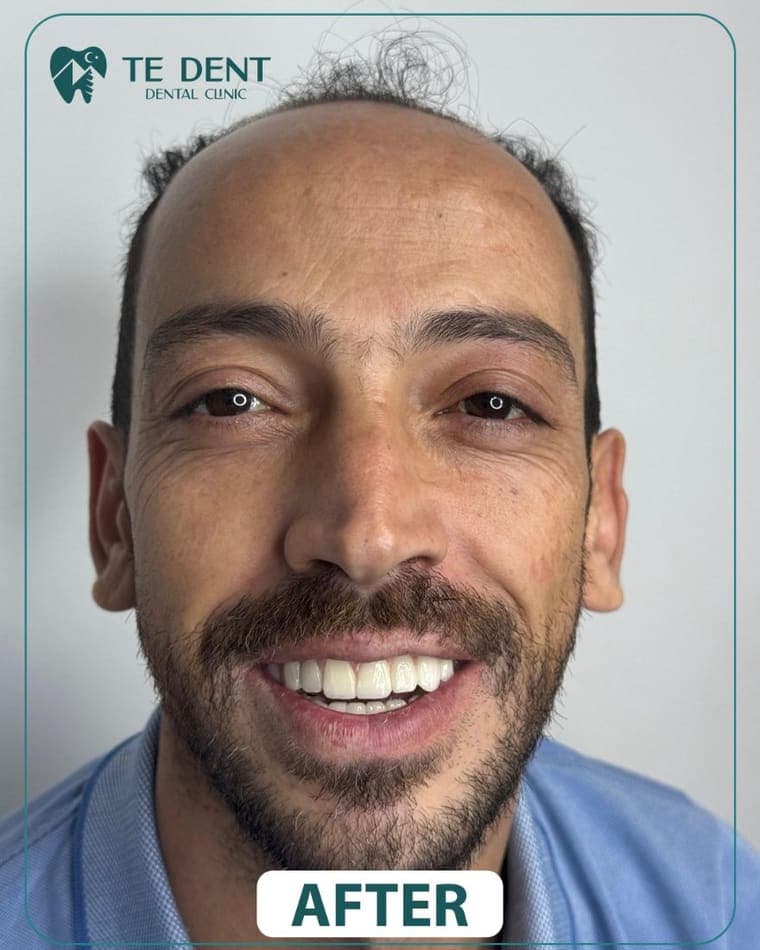
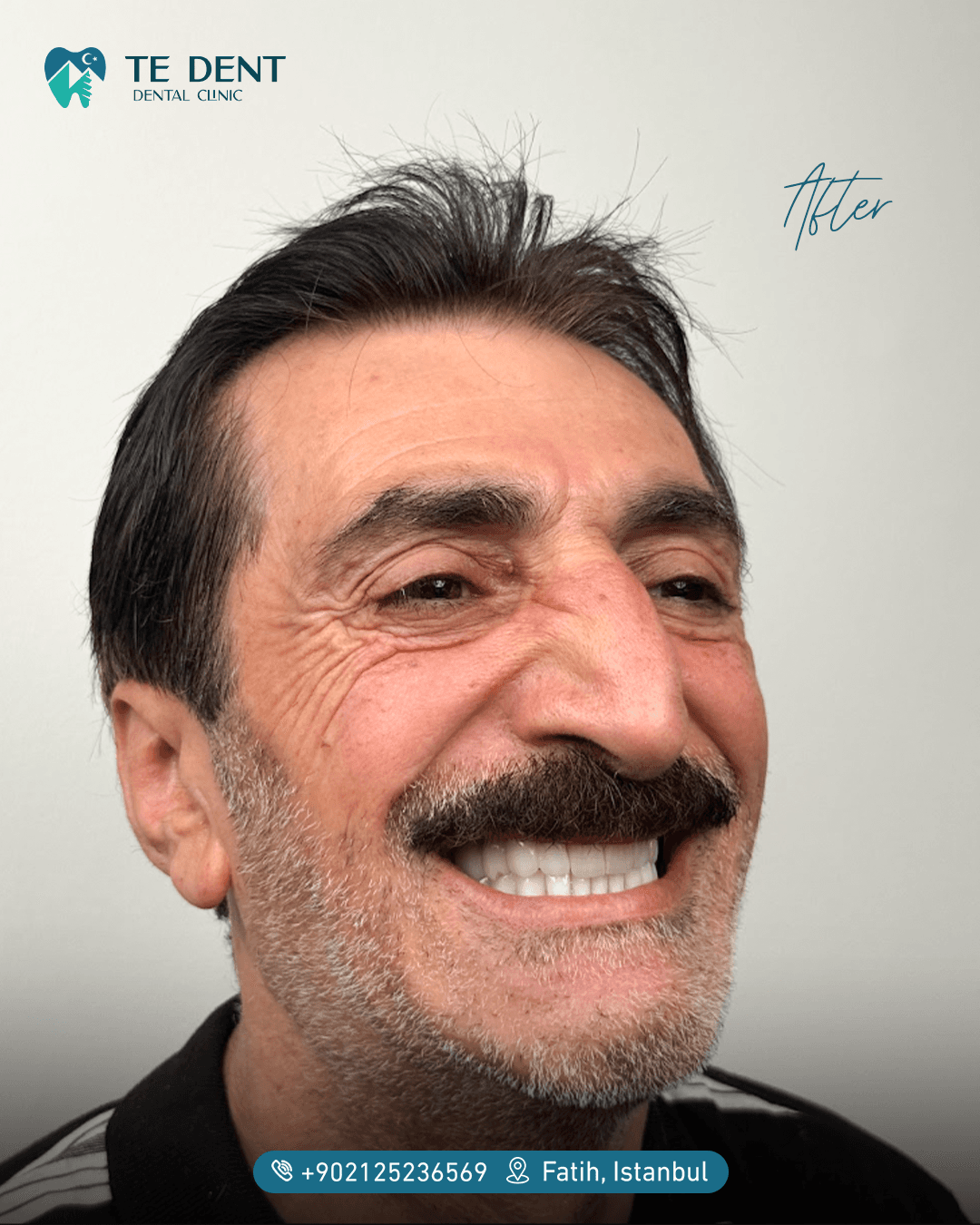
At TE Dent, a smile can combine E-max veneers and zirconium crowns, decided tooth by tooth after the examination. Before any tooth is prepared, you see the planned result as a digital design and a mock-up, and the teeth are prepared as little as possible.
A Hollywood smile or E-max veneers take about 10 days, in a single visit to İstanbul. Send photos or X-rays on WhatsApp, and a dentist reviews them and sends a written plan with the steps, visits, days and cost.
Questions
Is composite cheaper than veneers?
Generally, yes. Cleveland Clinic describes it as one of the least expensive cosmetic dental treatments, but it does not last as long as veneers or crowns.
Can composite be reversed?
Usually, yes: composite typically needs no enamel removal. Veneers and crowns are not reversible, because enamel is removed so they fit.
How long do composite, veneers and crowns last?
According to Cleveland Clinic, composite lasts about three to 10 years before touch-ups, veneers are replaced every 10 to 20 years, and crowns last five to 15 years on average, longer with good care.
Zirconia or E-max: which should I choose?
It depends on the tooth. Zirconia is very durable and often chosen for back teeth, bridges and implants; E-max is valued for its light transmission and often chosen for front teeth.
Can TE Dent combine veneers and crowns?
Yes. A smile at TE Dent can combine E-max veneers and zirconium crowns, decided tooth by tooth after the examination.
Still have a question about your case?
Send your X-ray or your question, and we will review your case and explain the next step.
Ask about your caseRelated pages
Sources for the general information
Independent public sources. They do not endorse TE Dent.
- Cleveland Clinic. Dental Bonding & What To Expect
- Cleveland Clinic. Dental Crowns: Types, Procedure & Care
- Oral Health Foundation. Veneers
- American Dental Association — MouthHealthy. Veneers
- Ivoclar (manufacturer information). IPS e.max Press — lithium disilicate glass-ceramic